 UBTSInternational Corp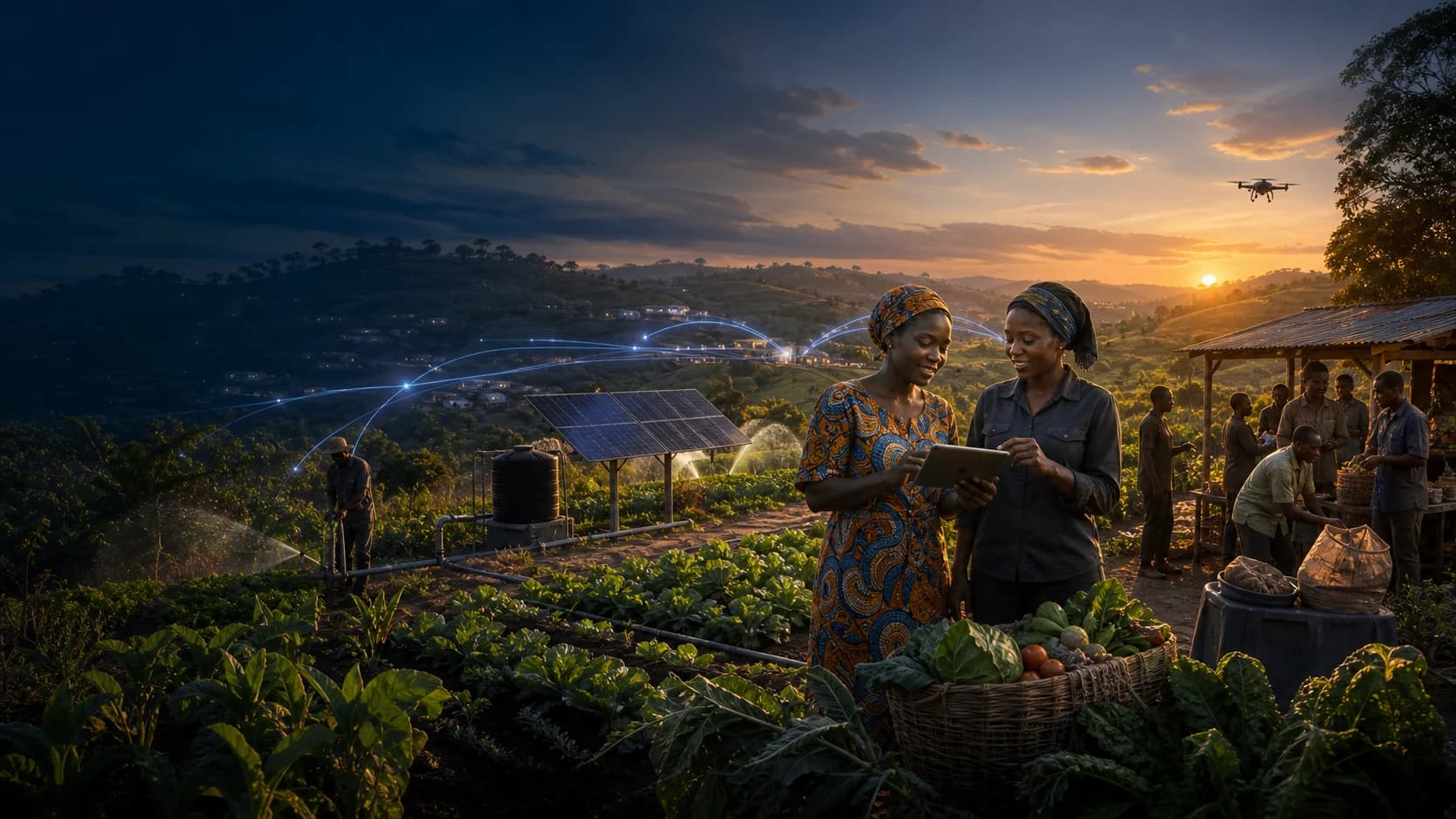
UAP · Corporate programme framework
Agricultural systems designed around people, evidence and resilience.
The UBTS Agri-tech Programme (UAP) is a strategic framework for configuring governed agricultural ecosystems. It is intended to connect public priorities, farmer and cooperative needs, enabling infrastructure, trusted information and appropriate market services without positioning UBTS as a farm, bank or commodity buyer.
Public by design. Precise about boundaries.
This page consolidates publication-safe conceptual information from the UBTS source corpus. Unverified statistics, financials, named partners, licences, roadmaps, leadership profiles and unapproved operational statuses remain confidential.
Productivity depends on more than a single application.
Agricultural outcomes can be constrained by water, energy, storage, extension, equipment, information, logistics, finance and market access at the same time. The programme therefore treats agriculture as a connected system rather than a stand-alone technology deployment.
Configuration begins with national policy, regulator responsibilities and the lived priorities of farmers, cooperatives and local value-chain participants.
A modular portfolio for local configuration.
Candidate programme modules are assessed and governed independently. A country configuration may use some modules and exclude others depending on mandate, readiness, evidence, infrastructure and approved partners.
Enable the ecosystem without absorbing every role.
UBTS is framed as an ecosystem enabler and technology-infrastructure partner. Public authorities retain their mandates; regulated financial, certification and market functions remain with authorised institutions; farmers and communities retain the human and economic purpose of the programme.
Claims about yields, market access, financing, certifications, partners or country rollouts require programme-specific evidence and publication approval.
Connect a priority to a governed framework.
Government and regulatory inquiries are routed first, followed by communities, infrastructure partners, development institutions and investors.
Start the dialogue↗